Describe what you imagine our collective equality of opportunity project might look like when it’s finished. Describe three or four main sections of that site with a brief description of what sorts of questions or subjects they might address.
[Hit publish and shut my laptop for the night last night, but I guess I shut down too quickly and it never finished publishing. For the sake of record keeping, publishing it now.]
Let’s tag these “eopsketch“
]]>Once you’ve published your Listening Project page, you need to also publish a post to your site. You should begin with a brief paragraph that summarizes the key points of your argument in such a way that it invites a reader’s interest enough to want to read the full piece.
You should also write a longish paragraph or so reflecting on the writing that you did and what you learned in the process.
How do you see your work on the podcast episode helping you to achieve the learning outcomes for this course? Link to the specific learning outcome posts that applied to your work on this assignment, and explain how you met that outcome with your work on this assignment.
You might also address questions such as:
Once you have completed your podcast episode, you should publish a reflection post. Embed the Soundcloud episode in your post (if I haven’t published the episode yet when you publish your post, just edit the post later to add the link once I have).
Your refection should be 250 – 500 words and should be in the form of an essay with complete paragraphs, not as a list of bullet point answers.
Include a brief description of your process for developing the podcast. How did you and the other producers divide up the tasks involved and how did you structure your collaboration? In what ways does your episode respond to the other episodes in the series — in other words, compare your episode to the ones before it, explaining how you gained inspiration from, adapted, or resisted something that your peers did in their episodes.
Please describe your primary goals with the episode that you produced and explain the strategies that you used to achieve them. You are producing these episodes under a number of time and technological constraints, so it’s likely that there will be some goals that you just cannot accomplish within those constraints — address what challenges arose for you and the choices you made to meet them and/or describe what you would have done differently had you more time/resources available for your episode (in other words, what are some aspirational goals that were perhaps unrealistic given the constraints of the assignment but that you would have liked to have tried to accomplish if circumstances were different?).
How do you see your work on the podcast episode helping you to achieve the learning outcomes for this course? Link to the specific learning outcome posts that applied to your work on this assignment, and explain how you met that outcome with your work on this assignment.
Make sure you address the sets of questions above and then also consider some of the questions below and address them in your reflection (you definitely won’t be able to answer all of these, so go through the list and pick some that seem to be most of interest for you and write about them):
As you read Jenkins and Creeber for class on Tuesday, I want you to take some sort of visual notes representing their definitions of new media. You can make your visual notes however you like — the only requirements are that you try your best to summarize and represent the arguments from “Theorizing New Media” and“‘Worship at the Altar of Convergence’: A New Paradigm for Understanding Media Change” and that you somehow you get your representation into a post on your site.
You can draw notes by hand on paper and then scan or take a photo and post them. (I prefer that you scan them — there are scanners around campus, including in the library, but if you take a picture please make some effort to take a good quality picture that we can actually make out.) You can also create your visual representation digitally to begin with in a bunch of different ways.
Some suggestions include:
The goal with this assignment is just to get you to play around with visualization techniques instead of relying solely on text to convey information. We’ll spend some time looking at the visualizations as we discuss the chapters on Tuesday.
Remember that this is just a sketch assignment — you don’t need to produce beautiful designs and you should not spend tons of time on this. Read the articles carefully and then spend a little bit of time sketching out your visuals, then post them. This is not polished, major assignment work but a sketch.
Tag your posts with however many tags seem appropriate, so long as one of them is “sketch4”
I’m a big fan of the work of Giulia Forsyth. She works in a teaching and learning center, where she helps professors and instructors be more innovative in their teaching practices, and she also works as a visual note-taker and facilitator, which means that she is sometimes employed to go to presentations and meetings and to doodle notes for the meeting.
Check out this four minute video where she gives a quick summary of how she began to take her doodling seriously and where it has led her:
On her Visual Practice page, Forsyth has lots of videos and images explaining how she approaches the task of producing drawings that help her and others to not just grab the information that’s been presented in a class or discussion, but to grapple with the material and better understand it. You can also see numerous examples on her Flickr page, especially her Visual Practice album.
I’m not asking you to take visual notes in real time in the same way that Forsyth does (though I would encourage you to try something like that!) so the technological choices for you are much easier, but I hope that the resources above are helpful in getting you to think through why this sort of practice might be helpful.
]]>
Now that we’ve settled on the title for our podcast, The Web We Weave (which we might write as THE wEB wE wEAVE) we need a few images before I can add the RSS feed for our new Soundcloud account to iTunes so that an audience can listen and subscribe to it:
(We also need to have episodes uploaded, which we won’t have until 2/16 when our first pair of producers finish their episodes and I upload them.)
Here’s your next sketch assignment: each of you should take a stab at designing a square cover image for our podcast. If you have some interest in design, it would be cool if you also tried creating a rectangular banner image too!
Take this as simply a creative challenge. Try to come up with a single image that conveys the discussions we’ve had so far about what this podcast will be about, the suggested topics in the podcast planning doc, and your own sense of what you want to happen with the podcast.
Use whatever technology you choose, including crayons and paper if that is what works for you. If you are using digital methods, export a good quality .jpg or .png file. If you use analog methods for designing a cover, then make a color scan of your image (don’t just snap a photo with your cell phone).
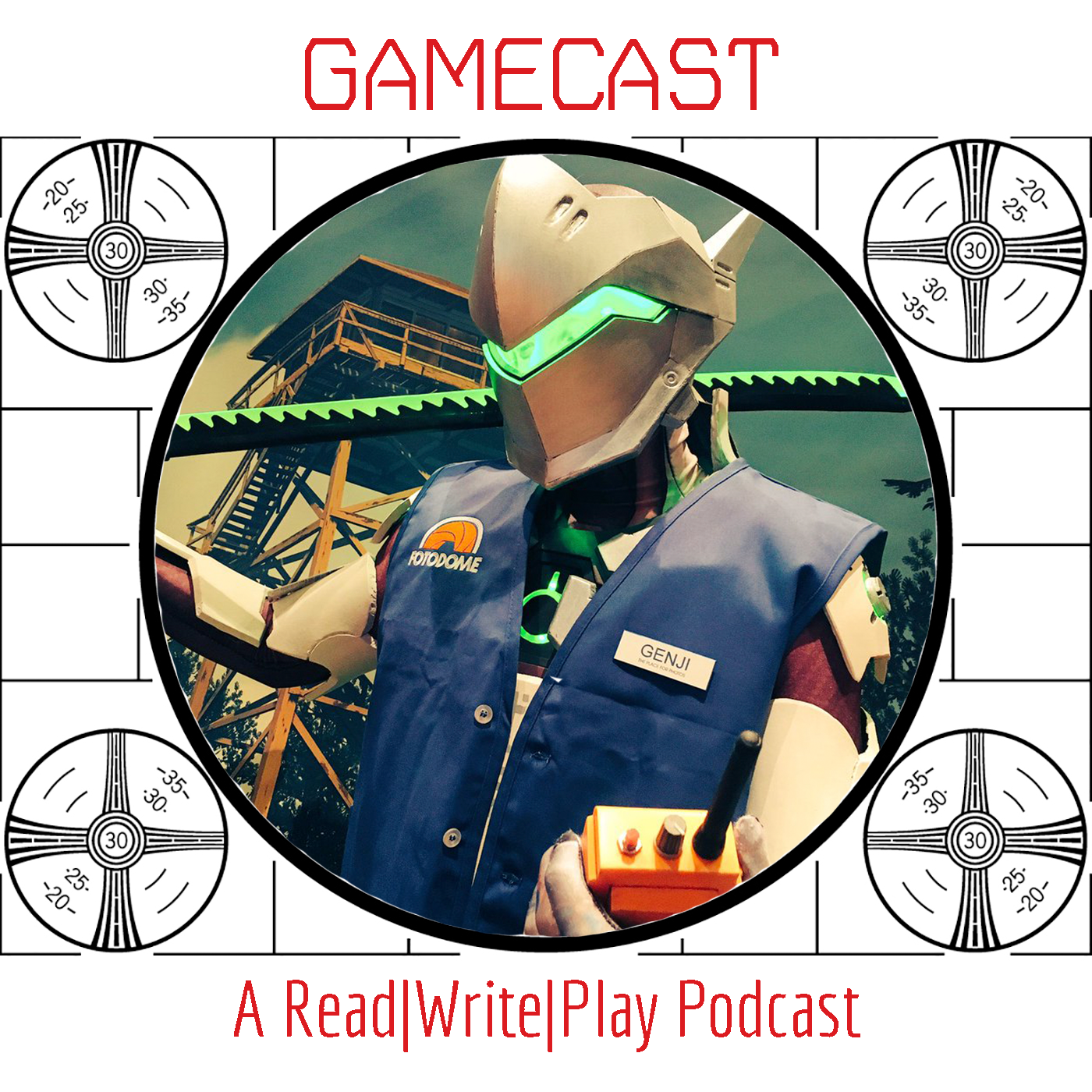
Here’s some inspiration for you: a the podcast gallery has a big list of podcasts and you can scroll through the cover images to see other designs. And here are the 2 covers for the podcast series from my classes on video games: Gamecast and Doing Video Game With … in case they help to spark something.
If you use images created by someone else in your design, make sure they are CC-licensed and allow modifications (in other words, the creator did not choose the NoDerivatives license).
]]>
This is really a placeholder post for the sake of consistency. Here’s what I asked you to do as your sketch assignment for week 3:
Your homework between now and class on Tuesday is to read the introductory chapter of George Pullman’s Writing Online and to liveblog your reading on uBlend — which in this case means as you read, I want you to keep an eye out for claims that seem especially insightful, unexpected, or challenging. When something seems especially worth note, check the uBlend class stream and if someone has not already written about that claim, then add a post where you quote the claim, or at least paraphrase it, (and cite the page number parenthetically so we can all find it). Add a single sentence of your own — even if it’s brief — indicating why you find that claim interesting or posing a question about it. If someone has already addressed the claim that you were going to, add a “+1” reaction to their post, and if you feel like you have a slightly different reaction or want to offer an answer to the question your classmate posed, consider adding a one-sentence comment. You should each have at least one post in the stream, preferably two, and at least one comment on a classmate’s post (in addition to any +1s).
Usually these sketch assignments will be more visual and will be published as posts on your sites, but because you were still getting your sites set up, I went with liveblogging for this week instead.
]]>Once you’ve created your subdomain, you need an image to represent yourself and/or your site for the class: an avatar. Your avatar can be whatever you want it be but try to create something that both reflects you’re personality and speaks to the topic for this class in some way.
Start by choosing one or more of your own photos as the basis of the avatar, drawing something yourself and scanning it, or finding one or more CC-licensed images on Flickr that you can modify. Make certain to keep a note for yourself of the URL for the photos you use if they are not your own.
Crop and otherwise edit the photo(s) in a photo editing application (like Photoshop or PicMonkey or Pixlr). You can create a layered or collage effect, if you’d like. Add your name on your badge in such a way that it’s legible. You might also include your domain URL, but that’s not required.
Your final badge should be square and at least 512 pixels wide and high.
When you’re done, you’ll need to put the image two places, with an optional third:
First, load the badge into your Media Library and publish it to your site in a blog post. Include information and links in the post about the source(s) for images included in your badge. Write a paragraph or two about why you chose those images, what aspects of yourself and your interests are represented in your badge, and/or what difficulties you faced in creating the badge.
Seconly, go into your dashboard to Appearance > Customize > Site Identity and load the image as your site icon.
Finally, if you do not already have a gravatar, create a gravatar account connected to whatever email you use when you comment on sites for this class and load your avatar there. From then on, your avatar will show up as your picture when you leave comments here and on other students’ sites.
]]>The Assignments pages will include descriptions of the major assignments for the semester. In addition, you will have frequent, shorter and generally less formal, writing assignments. I’ll describe those assignments to you either in class or via blog posts here on this site (or both).
It is vital that you keep up with these as they are assigned. They help prepare you for class, give you a direction to work, give you practice opportunities for writing, critical reading, and thinking. These assignments are due on the assigned date and will not be accepted late (unless we make a prior agreement). If you know you will be absent, you should post your assignment early.