The next logical step in our process should probably be to visualize the data we have for the top 20 schools now and find trends among these institutions. After, we have these trends, figuring why these attributes allow for a higher mobility rate might be one of our priorities. We may also want to compare these common traits to schools with a lower mobility rate in order to see what those schools can change to increase their respective rates.
Ideally by the end of the project we will be able to add on to the conversation about which elements in the school system offer students the chance to succeed in their undergraduate education. We may be able to combine our new found data with other groups and ultimately come to a different interpretation than what we originally thought as well.
]]>


Literacy Narrative: The Present
Understanding my own actions is something I try to do often. Why do I eat the way I do? How can I improve my diet? What patterns do I see among my friends?
One aspect I hadn’t thought about analyzing was my online presence as a small media creator. Perhaps this was because I haven’t previously cared too much about my writing or improving it. However, since the only way to improve in such a field is through practice, my present narrative is about helping myself understand my love for tech mixed with the contradiction of my lack of open media practice.
]]>The Odyssey has been a new media platform that I’ve always been pretty outspoken about. It’s been a constant Facebook newsfeed pop-up, as some of my Facebook friends are writers, and others share their friends’ articles. The first few articles I read I judged pretty harshly as the content was superficial and the writing was painfully ungrammatical. Therefore, when Emily and I decided to focus our podcast on The Odyssey Online, my nerves were further suppressed.
To prepare for recording, we did thorough research in addition to combining our own opinions, which we then formatted into a detailed outline. After we typed up the outline, we went through and discussed it in order to add some more talking points. Heavily preparing was really important going into recording, as we didn’t feel comfortable going in blind and then recording an improvised conversation. This did lead to some of the podcast sounding a little too formal, but the improvised talking points here and there did balance it out. Because we prepared so much, the editing process was surprisingly easy and quick.
In terms of assessing my work with a podcast versus my essay writing, I’d say you can’t really compare the two since they’re so drastically different. I feel as though essays are much more technical, require more time and editing, and I personally feel a lot more comfortable with writing; I have a much easier time articulating my thoughts on paper rather than verbally. It was also different because this podcast was collaborative, whereas essays are typically individualized. On the other hand, I prepared for this podcast the same way I prepare for essays, which is researching extensively on the topic and then putting my research into an outline.
A skill that was further developed in doing the podcast was thinking on my feet. I have some experience with this in journalistic interviews in high school, but it is definitely a skill that I’d like to work on more. The podcast made me progress as a learner in terms of collaboration. In past projects, I had a difficult time trusting my partner to do the work; however, I trusted Emily to do her part and I think we both complemented each other’s working styles.
Honestly, I didn’t set such high standards for myself for my first podcast because I felt that just creating one in the first place was a huge hurdle of mine. Going forward, however, I’d like to consider perhaps conducting an interview in the podcast or including an outside guest speaker. I think Emily and I did a great job of expanding The Web We Weave series as we offered a criticism of a new media platform. I’m happy that I was able to do a school project on something that I’ve been passionate about, and that my opinion will actually be heard. I’ve learned a lot about podcasts in general and about myself as a student through the creation of this episode, and I’m interested to see how I create the next episode.
]]> ]]>
]]>I didn’t realize the effect technology had on my childhood until I brainstormed through an old-fashioned web where I mapped out all of my favorite computer games and at what stage in my life I played them, ranging from Webkinz to Brickbreaker. I also discussed the evolution of my communication and the shift in knowing my friends’ home numbers to now sending them a short text message. Pre-writing allowed me to notice details about my relationship with computers that I stored in the past and forgot about over time.
In this narrative, I did not use any new media strategies, however perhaps later in the class I will incorporate new media into my writing.
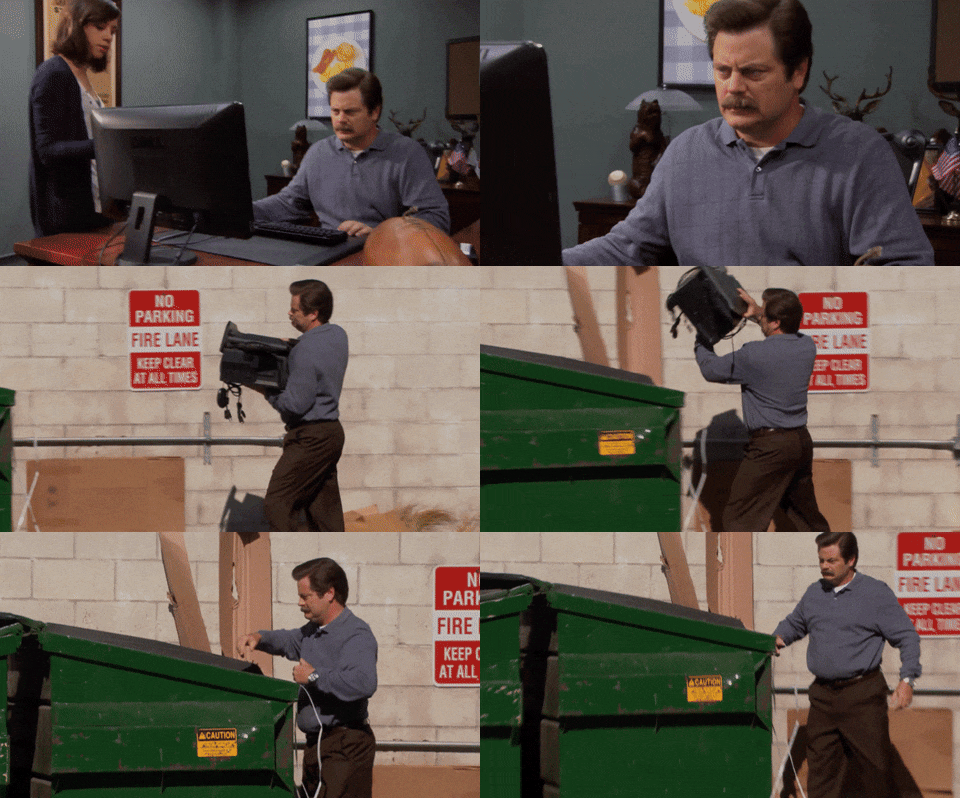
(http://giphy.com/gifs/HteV6g0QTNxp6)
]]>

I’m not sure whether this image would be good as the banner or the cover image, but it is the first site that popped into my mind when we thought of the title for our podcast.
]]>In this class, I make a clear distinction between blog posts and pages: all of your major, formal projects will go onto your sites as pages. The sketch assignments and all of the other shorter, low-stakes, reflective writing that you do will go onto your sites as blog posts. Pages can be edited just as posts can be, but in general they are meant to serve as static, completed, more or less self-contained pieces of writing. Blog posts are usually meant to go up onto the posts page in descending chronological order, so built into the function of a blog is that you write something and publish it, then if you have more to say on the subject or want to revise what you wrote in a major way, you do so by just writing a new blog post rather than going back to the original and restructuring it.
Here’s another clear distinction between posts and pages: posts syndicate but pages do not (because syndication is predicated on the idea of a frequently updating and changing posts page — static pages don’t need to syndicate because, well, they are more or less static). We are relying on syndication to the course site as the means of collecting all of the work that you do on your sites into a central location, but if your major projects go onto pages and pages don’t syndicate then how will they be included? When you complete one of the major assignments, you will write a blog post, linking to the landing page for the assignment. I’ll generally ask you to write something reflective about the work that you’ve done in those blog posts. Sometimes I might ask that you provide a summary or abstract of the argument, perhaps framing the post as an announcement meant to entice readers to check out what you’ve done akin to a teaser in journalism.
One last point: for the purposes of this class, at least, all blog posts and all pages should be multimodal and should include multiple media. You should not publish a page or a post that is composed entirely of text.
]]>